
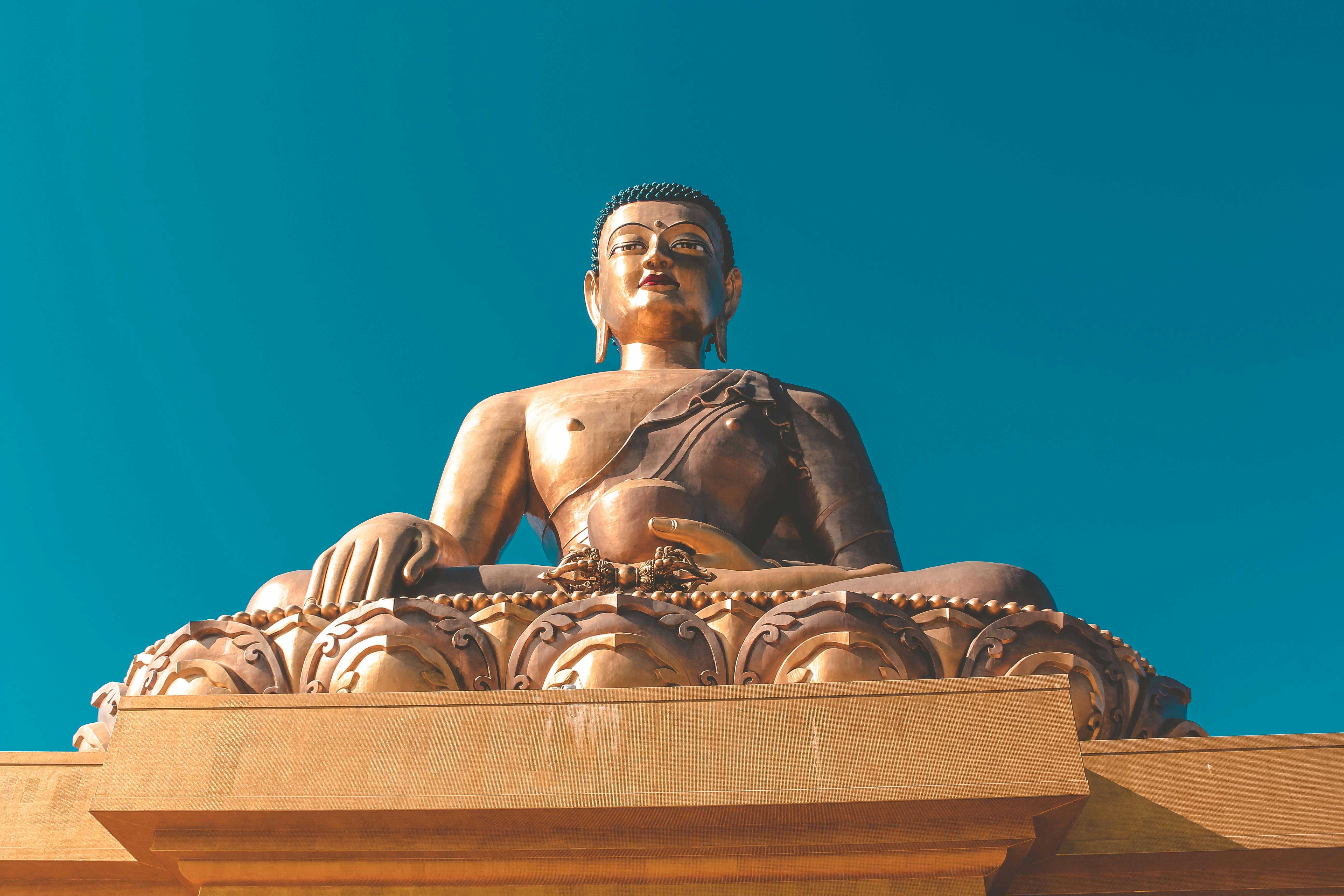
Day 1 –Arrival and Gentle Immersion into Bhutan’s Charm
Step off your flight into the mystic air of Bhutan, known as the Land of the Thunder Dragon. At the Paro Airport arrival gate, your friendly guide will be waiting to welcome you with a traditional greeting scarf. A comfortable drive through pine forests and winding hills will take you to the capital city, Thimphu. Ease into your journey with a visit to the Motithang Takin Preserve, where you’ll meet Bhutan’s national animal — the gentle takin — in its natural setting. This preserve was once a zoo but now reflects Bhutan’s Buddhist respect for animal freedom. As evening nears, travel up to the Buddha Dordenma, a 169-foot statue radiating peace. From this serene vantage point, enjoy sweeping views of Thimphu Valley — a perfect introduction to Bhutan’s spiritual heartbeat and tranquil landscapes.
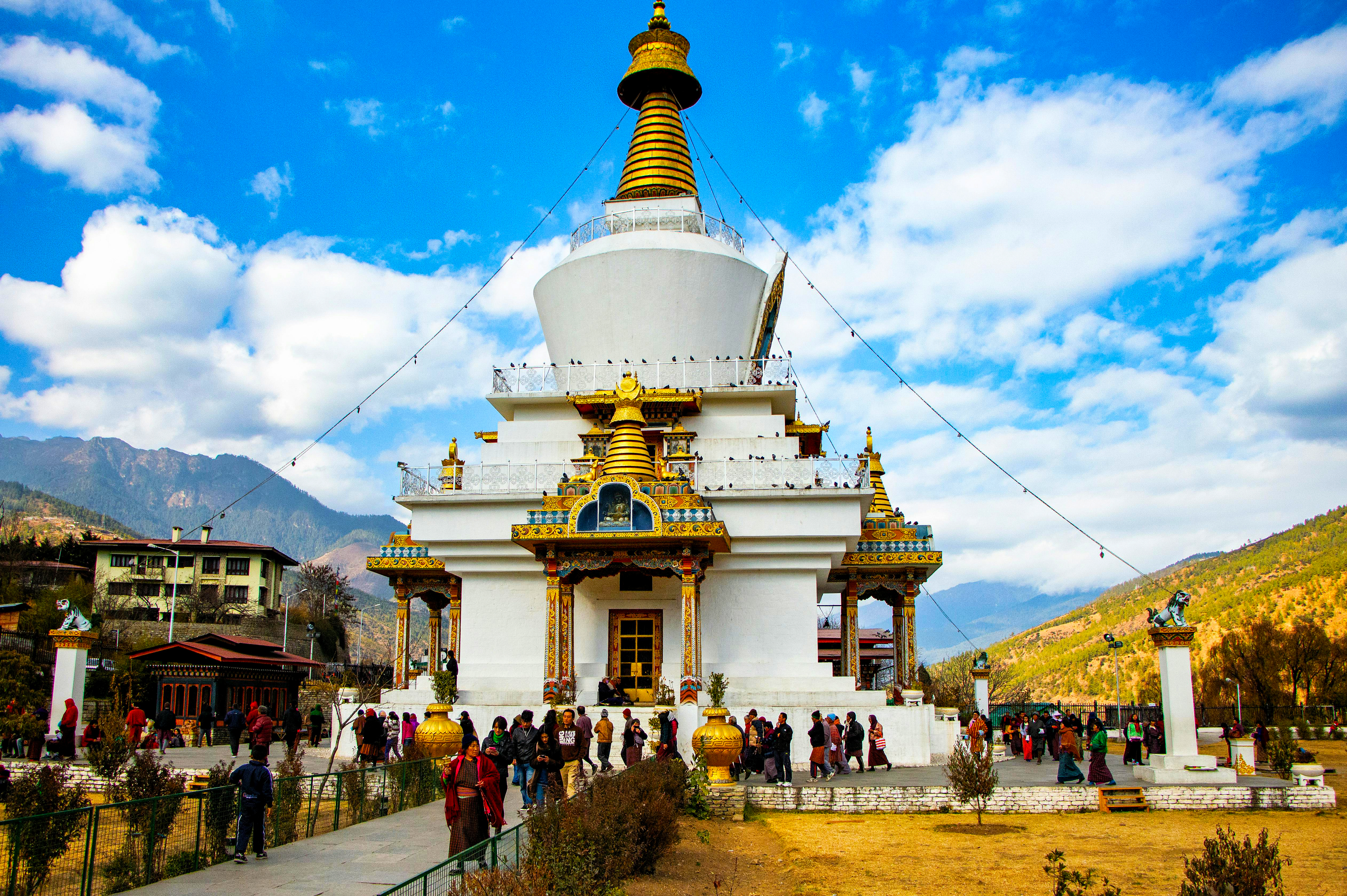
Day 2 – Thimphu’s Culture Trail: Monks, Markets & Museums
Dive into a day packed with Bhutanese character and color. Begin at the Centenary Farmers’ Market, alive with the sounds and scents of weekend trade. It’s where villagers from all corners of Thimphu Valley converge to share their harvests, crafts, and stories. Next, head to the Folk Heritage Museum, an intimate look at rural Bhutanese life. From rustic tools to ancient household objects, the displays tell stories of self-sufficiency, harmony with nature, and community traditions. A short walk brings you to the National Textile Museum, where intricate handwoven designs reveal the pride and precision of Bhutan’s master weavers. You’ll gain insight into how textiles aren’t just clothing—they’re spiritual symbols.
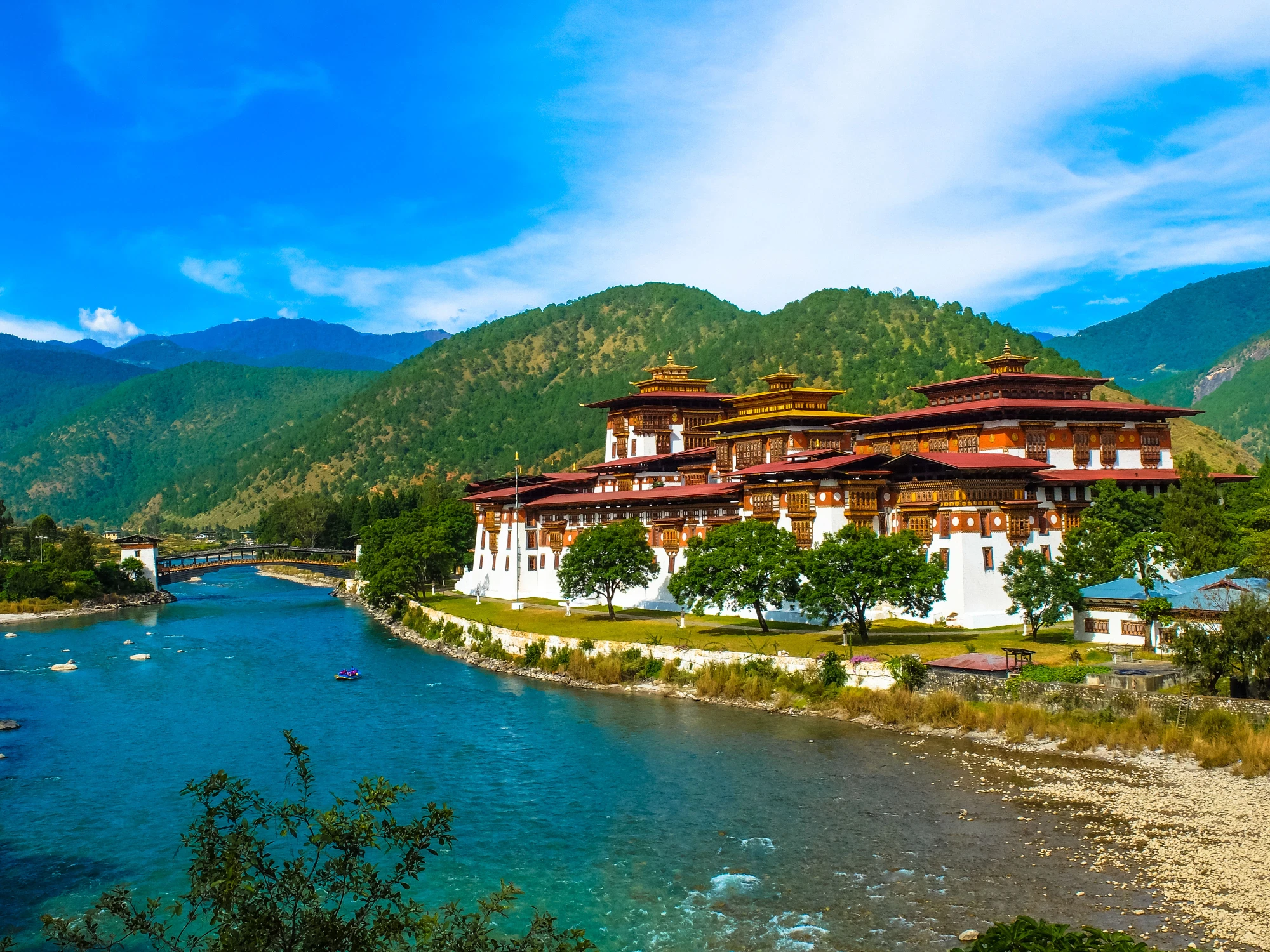
Day 3 : Exploring Himalayan Passes and the Historic Beauty of Punakha
Begin your journey to Punakha, the former capital of Bhutan, with a scenic drive that includes a stop at the stunning Dochula Pass. Perched at 3,100 meters, this mountain pass offers breathtaking 360-degree views of the snow-capped Himalayan range. It is also home to the 108 Druk Wangyal Chortens, constructed by Queen Mother Ashi Dorji Wangmo Wangchuck to honor Bhutan’s victory over Indian insurgents. Continue onwards to the awe-inspiring Punakha Dzong, one of the most iconic structures in Bhutan. Strategically situated at the confluence of the Pho Chhu and Mo Chhu rivers and framed by blooming jacaranda trees, this six-storey fortress was built in 1637.
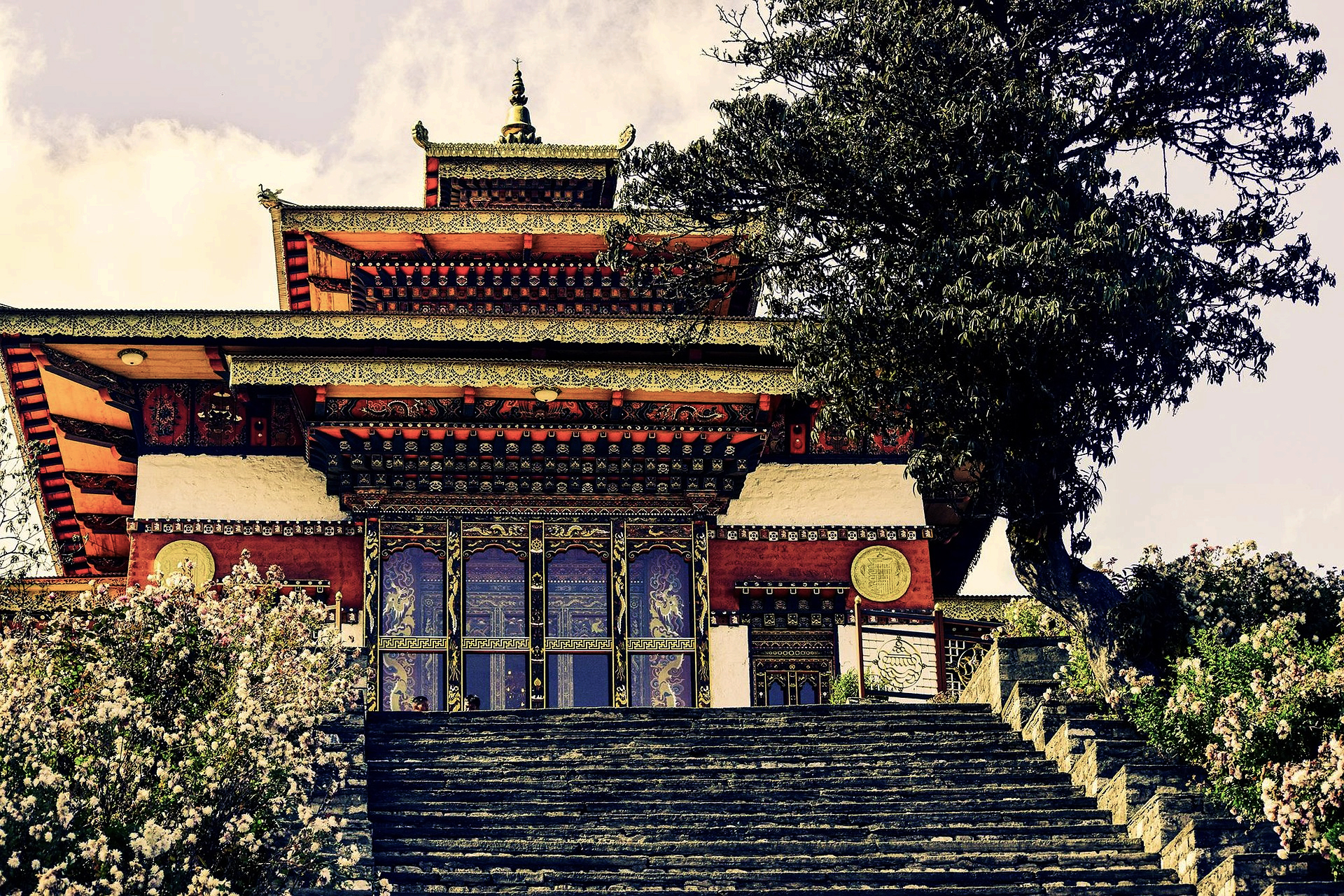
Day 4 : Unlocking Central Bhutan: It All Begins in Trongsa
Today, set off on a picturesque eight-hour drive from Punakha to Bumthang, with a captivating stop in Trongsa—the ancestral seat of Bhutan’s royal lineage. As you near the town, the grand Trongsa Dzong reveals itself, dramatically perched above the Mangde Chu Valley. This expansive fortress, a stunning example of traditional Bhutanese architecture, has been beautifully restored and holds deep significance in the country’s monarchy—every Bhutanese king must first serve as the Trongsa Penlop before ascending the throne. Just beyond the peaceful village of Chendebji lies the Chendebji Chorten, a striking white stupa built in the 19th century by Lama Shida.
Day 5 : Bumthang: A Valley of Blessings and Legends
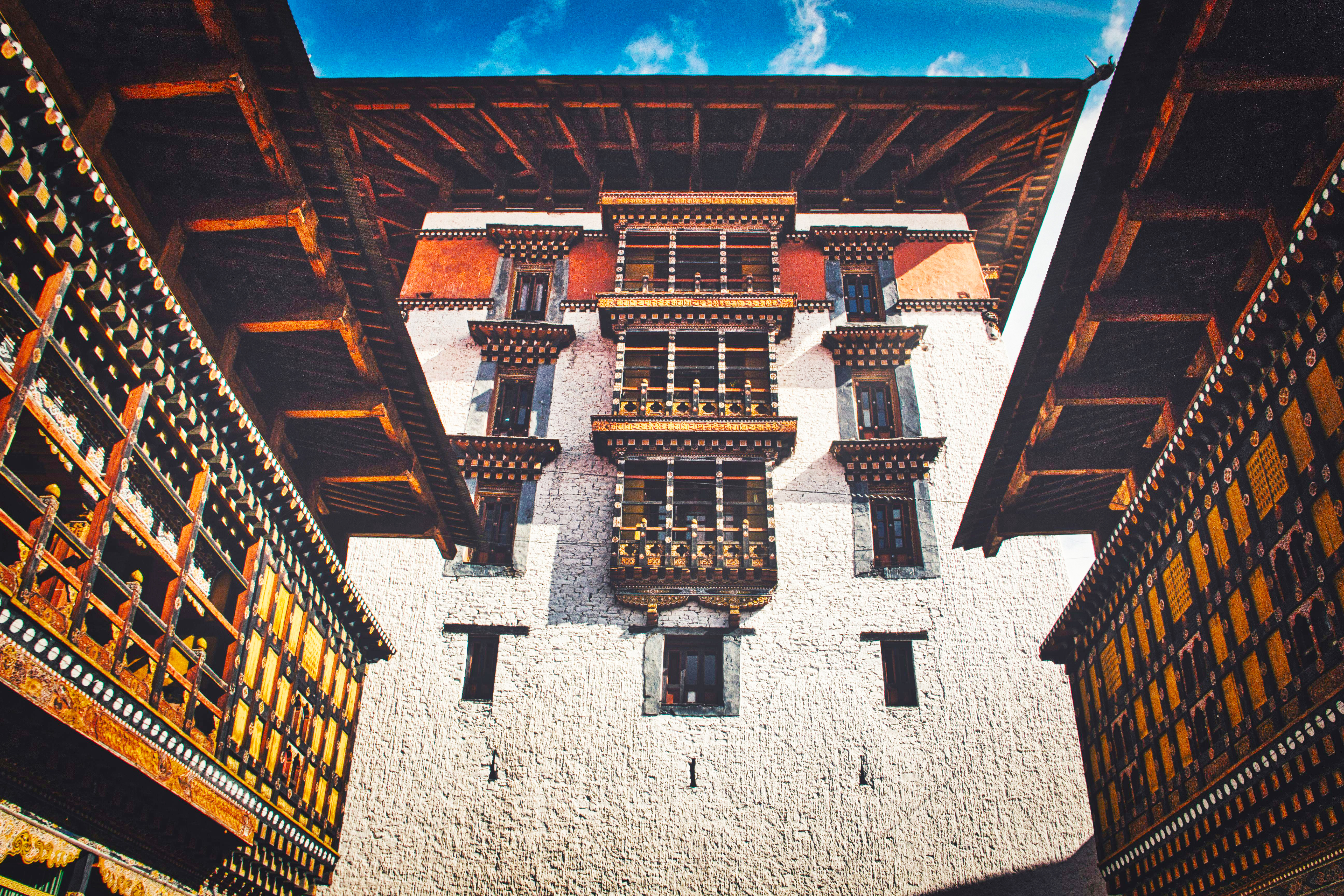
Embark on a journey into the enchanting Bumthang Valley—revered as the spiritual heartland of Buddhism in Bhutan. Legend has it that in 746 AD, Guru Rinpoche arrived here, subdued a malevolent spirit, and laid the foundations of Buddhism in the region by establishing more than forty temples. Begin your exploration at Kurjey Lhakhang, a revered temple built around a sacred rock bearing the body imprint of Guru Rinpoche after his victory over the demon Shelging Karpo. The temple complex exudes tranquility, nestled among ancient cypress trees.
Day 6 : Gangtey: A Journey Through Tradition and Royal Legacy
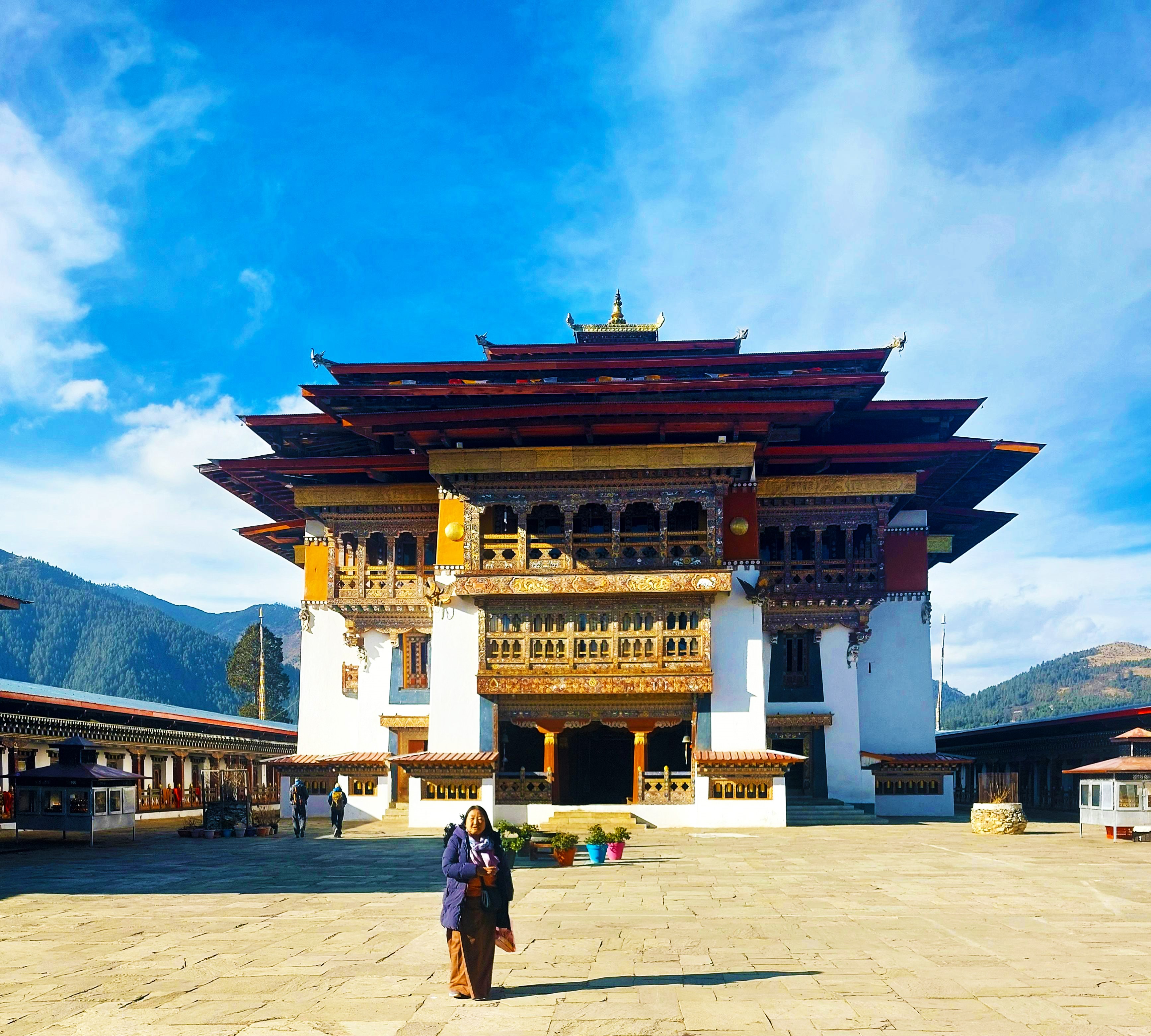
As you travel toward the serene valley of Gangtey, your route once again takes you through Trongsa—a town steeped in history and royal significance. This ancient stronghold has long been a cornerstone of Bhutanese monarchy. In fact, every king of Bhutan served as the Trongsa Penlop before ascending to the throne and wearing the revered Raven Crown. Make time to visit the majestic Taa Dzong, a watchtower built in 1652 to guard Trongsa Dzong below. Today, it houses the Royal Heritage Museum, offering a deep dive into Bhutan’s royal past. Here, you’ll find treasured artefacts from the Wangchuck dynasty, sacred Buddhist relics, and rare exhibits such as a 500-year-old warrior’s jacket and a biography of Guru Rinpoche written in his own hand.
Day 7 : Enchanted Valleys and Spiritual Retreats in Phobjikha
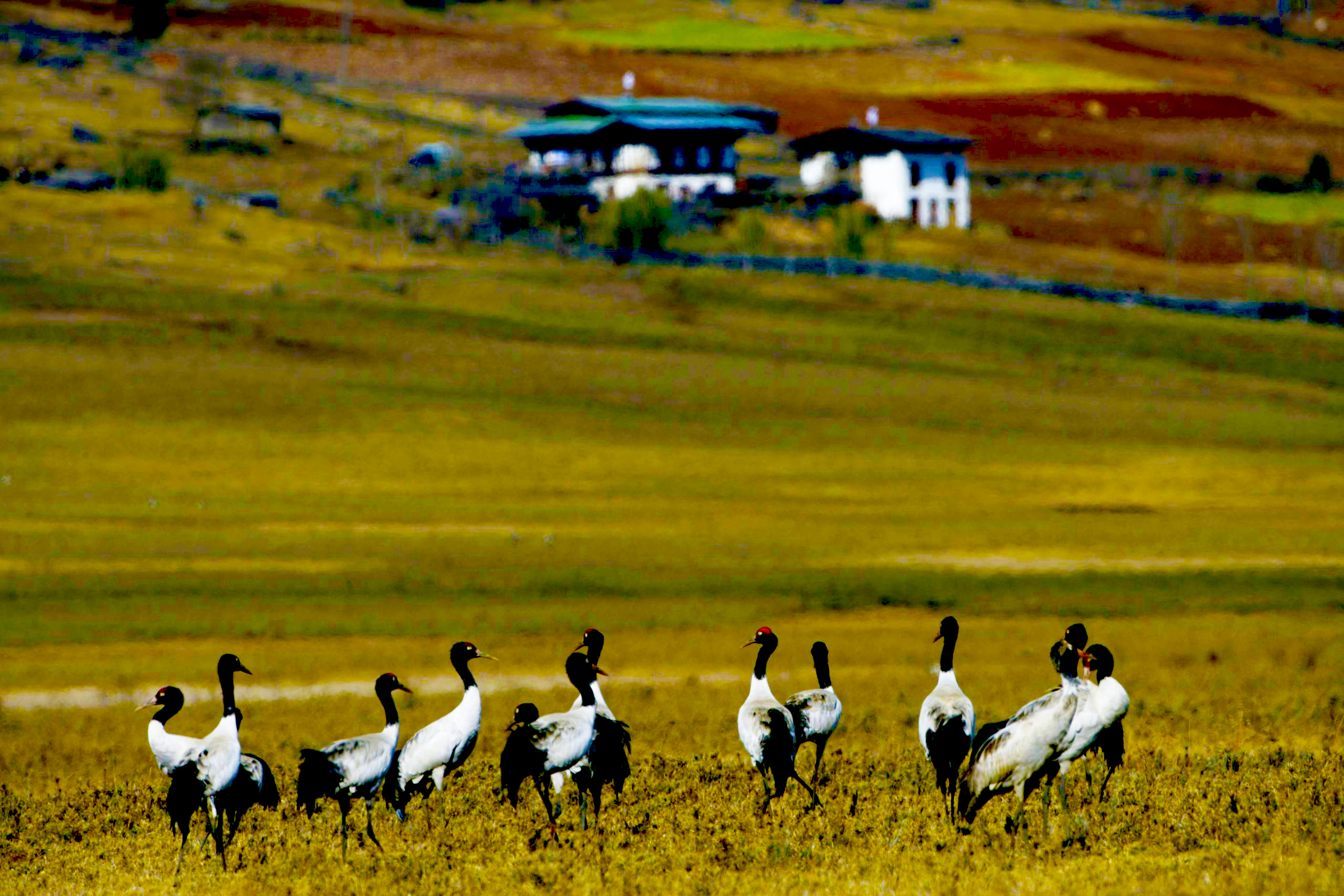
Today’s journey leads you to the stunning Phobjikha Valley, also known as Gangtey—a mystical winter refuge for the rare black-necked cranes. From November through March, as many as 600 of these graceful birds migrate here from Tibet, filling the valley with their evocative calls. Protected as a wildlife sanctuary, Phobjikha is also home to native creatures like muntjac deer, sambar, serow, and yaks. Dominating the valley’s landscape is Gangtey Goemba, a 17th-century monastery perched atop a gentle hill. Its grand prayer hall, supported by eight massive pillars, stands as a living testament to a prophecy made by the revered saint Pema Lingpa.
Day 8 : Timeless Treasures of Paro Valley
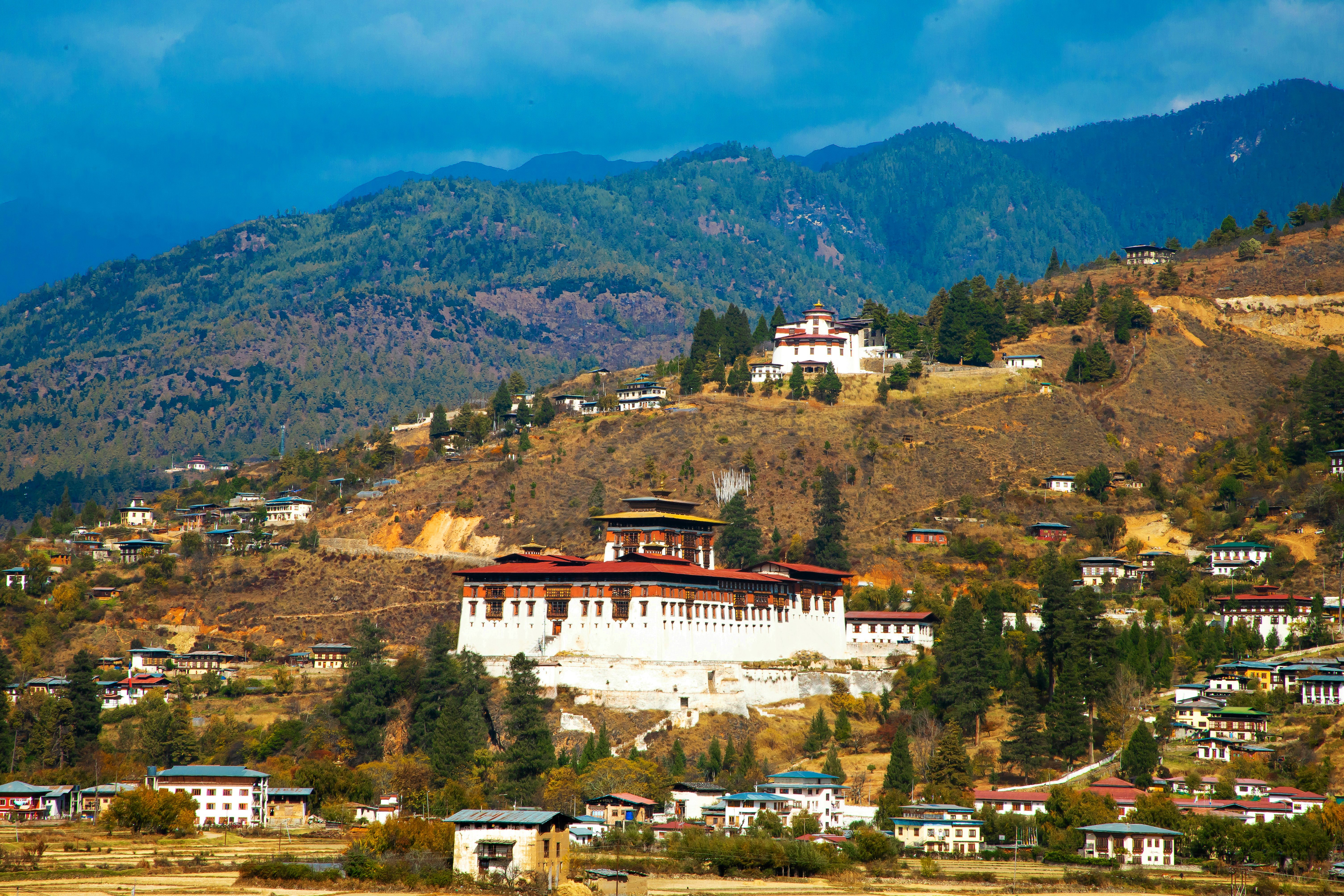
Return to the picturesque Paro Valley, home to some of Bhutan’s oldest monasteries and the country’s sole international airport. Towering majestically above the valley is Chomolhari (Jomolhari) Mountain, Bhutan’s third-highest peak at 24,035 feet, whose glaciers nourish the rivers that flow below. Discover the grandeur of Paro Rinpung Dzong, famously known as the Fortress of Jewels. This impressive 15th-century stone fortress serves as the administrative heart of Paro. Once linked to the opposite riverbank by a historic cantilever bridge, the dzong’s towering walls offer a window into Bhutan’s rich medieval heritage. Overlooking the dzong is Ta Dzong, a unique cylindrical watchtower built in 1649, now home to the National Museum of Bhutan.
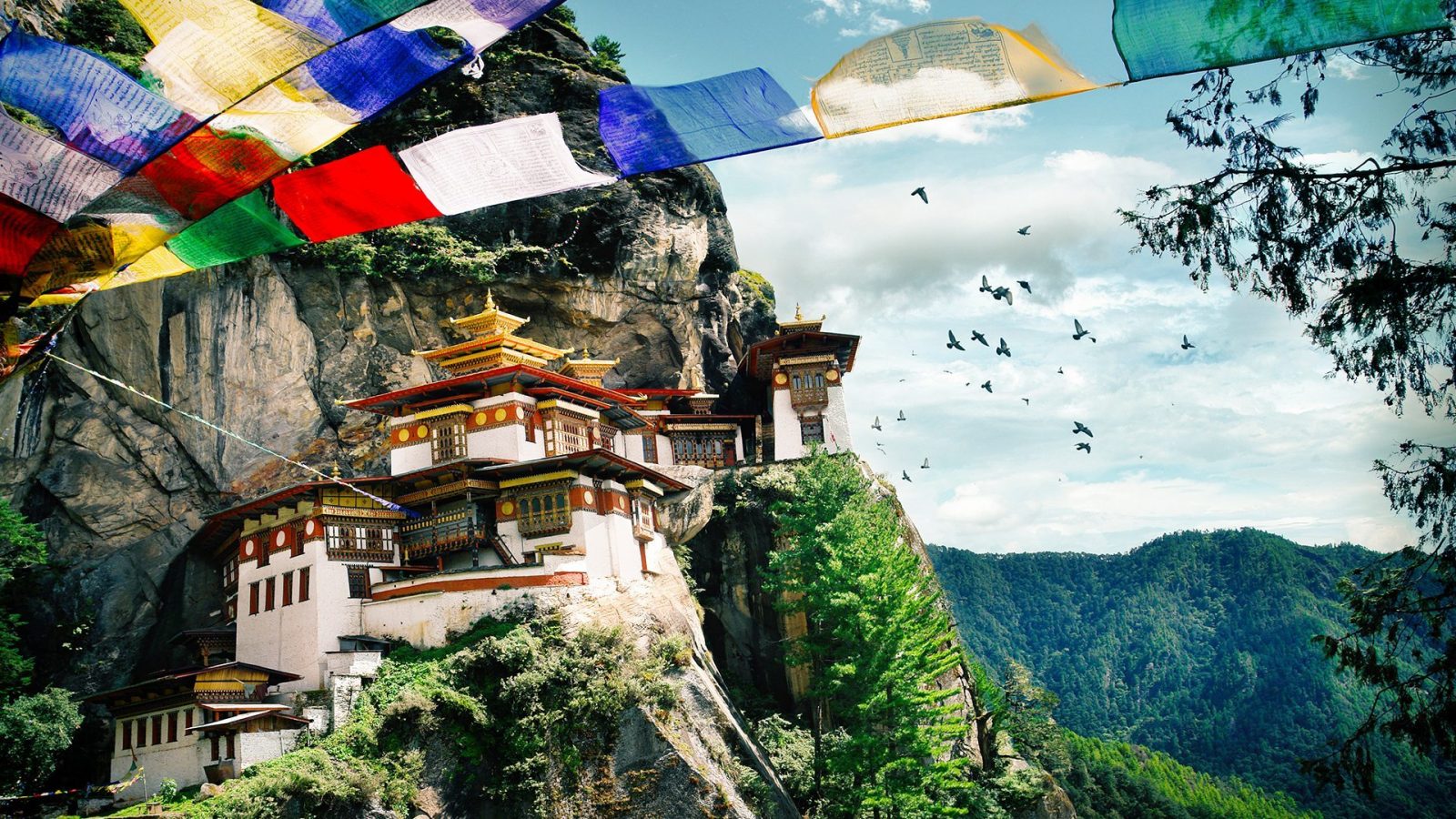
Day 9:The Sacred Tiger’s Nest and Bhutan’s Timeless Legends
Today, embark on a memorable two-hour hike to the legendary Taktsang Monastery—known worldwide as the Tiger’s Nest. Perched dramatically on a cliffside more than 10,000 feet above sea level, this iconic monastery is steeped in spiritual lore. It is said that Guru Rinpoche arrived here riding a tiger to meditate, marking the introduction of Buddhism to Bhutan. The journey is both physically invigorating and deeply spiritual, with colourful prayer flags fluttering in the breeze and stunning panoramic views unfolding at every step. A short drive away lie the evocative ruins of Drukgyal Dzong, a once-formidable fortress constructed in 1647 to repel Tibetan invasions.
Day 10: Departure: Leave with Lasting Memories
On your final day in Bhutan, enjoy a leisurely morning to reflect on the
incredible experiences of your journey. Depending on your flight schedule,
you may have time for a last stroll through the town, a final visit to a
local market, or a peaceful moment in a nearby monastery.
Your guide will assist with your transfer to Paro International Airport,
where you’ll bid farewell to the Land of the Thunder Dragon. As you take
off, carry with you the unforgettable memories of Bhutan’s majestic
landscapes, rich culture, and warm hospitality.
Safe travels and until we meet again!